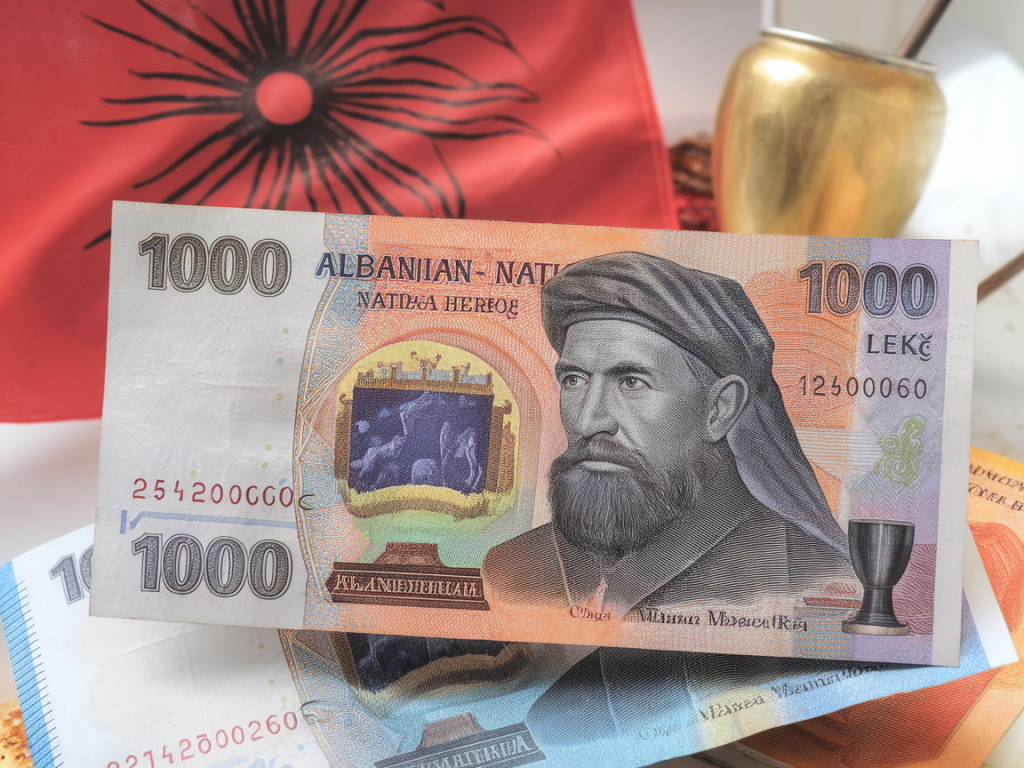
I travel frequently across Europe and beyond, and when I plan a trip to Albania I always start with one practical question: what is the monnaie locale en Albanie pour les voyageurs to bring, how much cash to carry, and when to rely on cards? In this guide I walk you through the real-life choices I make (and mistakes I’ve learned from) so you can make smarter, cheaper, and less stressful money decisions when visiting Albania.
Quick answer: which currency should you use?
Albania’s official currency is the Albanian lek (ALL). For most day-to-day purchases—taxis, markets, small cafés, local attractions—use the local currency: lek. That said, the euro (EUR) and, less commonly, the US dollar (USD) are accepted in tourist areas and for high-value services like hotels. My practical rule: carry predominantly ALL in cash, have a card in EUR or USD as backup, and expect to use cards only in larger businesses.
Why prefer the lek (ALL)?
- Better prices: Paying in ALL usually gives you the local rate. Vendors who accept euros often use unfavorable conversion rates.
- Small merchants and rural areas: Villages, small guesthouses, and local markets will often accept only ALL.
- Cash culture: Albania has a strong cash culture—many services, like bus rides and local food stalls, are cash-only.
How much cash should you bring?
When I plan a 7–10 day trip, I calculate a mix of cash and card. A baseline budget I use (per person) for moderate travel:
- Daily expenses (meals, local transit, small purchases): €20–€40 (~2,340–4,680 ALL at 1 EUR = 117 ALL)
- Accommodation: paid by card for hotels; small guesthouses often accept cash in ALL
- Buffer cash for remote excursions: 10,000–15,000 ALL (≈€85–€130)
So for a week I typically carry 40,000–60,000 ALL in cash (≈€340–€510) plus one or two cards. Adjust depending on your travel style.
Currency exchange: where to convert money
I avoid airport exchange desks unless necessary—rates are poor and fees can be high. Better options:
- Banks and official exchange offices (lokal "Këmbim-valutash"): Often the best rates in cities. Keep your passport handy for larger exchanges.
- ATMs: Widely available in Tirana, Durrës, Sarandë, and other tourist hubs. Use debit cards with low international ATM fees. Withdraw in ALL to avoid dynamic currency conversion (DCC).
- Bring euros as backup: If you arrive with some euros, you can exchange them in Albania easily—but check rates.
Cards, fees and contactless
- Visa and Mastercard are broadly accepted in hotels, restaurants, and larger shops in cities. American Express is less common.
- Contactless payments are growing in urban areas but less reliable in smaller towns.
- Expect merchant minimums for card payments (e.g., some cafés only accept cards over 500–1,000 ALL).
- Always choose to be charged in the local currency (ALL) at POS. Refuse conversion to EUR or USD as “service”—that’s DCC and it usually costs you more.
Exchange rates & examples (typical at time of writing)
Exchange rates vary daily; check a live source like XE or the Bank of Albania before you travel. As an example:
| Currency | Typical rate | Practical note |
|---|---|---|
| 1 EUR | ≈ 117 ALL | Most useful benchmark for conversions |
| 1 USD | ≈ 106 ALL | Accepted in some tourist businesses; convert to ALL for best price |
| 1 ALL | ≈ 0.0085 EUR | Small unit—expect prices like 200–1,000 ALL for everyday items |
Costs to expect (real-world numbers)
- Local bus ride (city): 30–50 ALL
- Taxi short ride (city): 300–600 ALL
- Meal at modest restaurant: 600–1,500 ALL
- Three-course meal at mid-range restaurant: 2,000–4,000 ALL
- Cappuccino in café: 150–250 ALL
These figures help decide how many small-denomination notes to carry—100, 200, 500 ALL notes are common and handy.
Safety tips and card security
- Use ATMs inside banks when possible—safer and sometimes lower fees.
- Notify your bank of travel dates to avoid card blocks.
- Bring a backup card stored separately in case of loss or skimming.
- Beware of unsolicited currency exchange agents—use established offices or banks.
Credit vs debit vs prepaid travel cards
From my experience:
- Debit card (local currency withdrawal): Good for ATM cash withdrawals. Choose a bank that refunds or minimizes foreign ATM fees.
- Credit card: Preferred for larger purchases and reservations for chargeback protections.
- Prepaid travel cards: Convenient if you want to lock in an exchange rate beforehand; check reload fees and ATM limits.
Is it worth bringing euros or dollars?
I bring a small amount of euros as backup (≈€100–€200). Pros and cons:
- Pro: Broadly exchangeable; sometimes accepted directly in tourist spots.
- Con: You often get worse conversion rates if a vendor accepts EUR but sets a poor informal rate.
Useful resources and sources I trust
- Bank of Albania — official info on the lek and regulations
- XE Currency — live exchange rates
- World Bank — economic context and tourism stats
- Lonely Planet — Albania — practical travel advice
When to negotiate prices and when not to
In markets and with taxi drivers (especially without a meter) I often negotiate—always in ALL; negotiating in EUR confuses the reference price. For fixed-price shops, hotels, and official services I pay the listed price or use a card.
Practical checklist before you go
- Order a small amount of ALL or EUR from your bank if possible (for arrival taxi/transport)
- Enable international withdrawals for your debit card and notify your bank
- Download a currency converter app and save an offline reference rate
- Pack a second card and keep it in a separate place
- Bring small notes (100–500 ALL) for tips, small purchases, and taxis
Personal anecdotes: lessons I learned
On my first trip to the Albanian Riviera I arrived with mostly euros. I paid more for a boat trip because the operator quoted me a “friendly” EUR-to-ALL rate. After switching to using ALL cash and withdrawing from a nearby bank ATM, I saved around 10–12% on local transactions. Another time, a guesthouse in a remote valley only accepted cash; I ended up paying a high ATM withdrawal fee at a tiny machine—now I always carry a modest cash buffer.
Summary of the practical approach I recommend
- Main currency to use: Albanian lek (ALL)
- Carry cash for daily purchases and rural areas
- Use cards in cities and for hotels—always choose billing in ALL
- Bring some euros as a safety net, but don’t rely on them for everyday purchases
- Prefer bank ATMs and official exchange offices to minimize fees