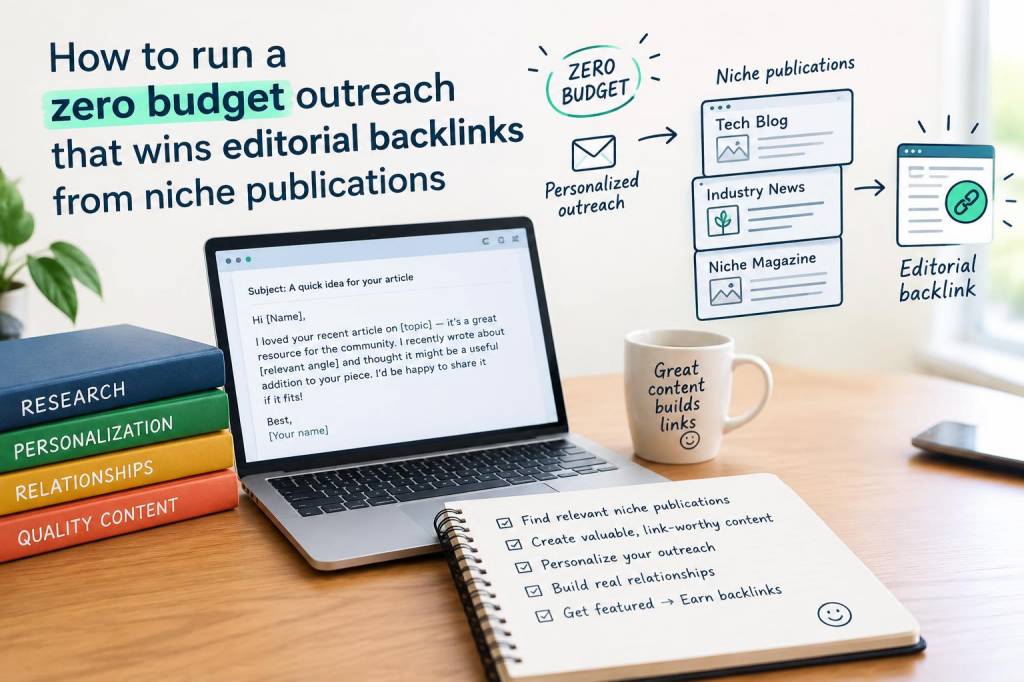
I want to share the step-by-step approach I use to run a zero-budget outreach campaign that actually earns editorial backlinks from niche publications. Over the years I’ve tested hundreds of pitches, tweaked assets, and learned that attention to relevance, value and genuine relationships beats loud, expensive outreach tools every time. Below I’ll walk you through the strategy I follow, examples of messaging, asset ideas, and the metrics I track — all without spending a penny on paid outreach platforms.
Start with surgical research
Before you write a single email, do focused research. Broad outreach wastes time. I spend most of my effort here because good targeting increases response rates dramatically.
- Identify 15–50 niche publications that cover your topic. Think trade blogs, community sites, sector newsletters, and local outlets. Use Google, Twitter lists, and LinkedIn search.
- Map the right contact. Look for the editor, section writer, or a frequent contributor who wrote about similar topics in the last 6–12 months. If a site lists no names, use Twitter/X or LinkedIn to find authors.
- Analyze recent content. What angles do they prefer? Data-led pieces, expert roundups, how-to guides, or opinion columns? Match your asset to their style.
- Collect quick notes: recent articles, tone, link policy (if available), and social profiles. I keep this in a simple spreadsheet — nothing fancy.
Create high-value, low-cost assets
Editorial publications say “we want value” — give them value without heavy resources. Your aim is to make their job easier and their article better.
- Exclusive data snippets: Even small surveys (50–200 respondents) run via Google Forms or Typeform can produce quotable stats.
- Expert quotes: Offer a short, ready-to-publish quote with context and a byline. Journalists love clean copy they can drop in.
- Practical templates and checklists: A one-page checklist or template in Google Docs or PDF is usable and shareable.
- Case studies: Short, real examples that demonstrate results — 300–500 words with a clear outcome and source links.
- Visuals: Simple charts, screenshots, or a clear infographic created with free tools like Canva or Google Sheets.
Craft outreach that respects the editor’s time
Your pitch must be concise, personalized, and clearly useful. I follow a three-line policy: hook, value, CTA.
- Subject lines: Keep them specific and benefit-driven. Examples I use: “Quick quote for your piece on [topic]” or “Data point for your article on [publication name]”.
- Opening line: Mention the recent article by the author and what you liked. Specificity signals you aren’t blasting everyone.
- Value line: Explain what you’re offering — an exclusive stat, a 2-sentence quote, a free checklist — and why it fits their article.
- CTA: One clear option: “Would you like the quote pasted here or via Google Doc?” or “Can I send the 1-page checklist?”
Example pitch I’ve used successfully:
Hi [Name], I loved your recent piece on [specific angle]. I run inbound/SEO work in [niche] and have a short, ready-to-publish quote (2 sentences) about [specific point] that would fit the paragraph on [subtopic]. Would you like it pasted here or as a Google Doc? — Élodie
Use micro-followups (but be human)
Follow-up twice if you don’t hear back. Keep it human and useful:
- Follow-up 1 (3–4 days): one-line nudge + a tiny extra — e.g., “Adding a 1-sentence stat below if helpful.”
- Follow-up 2 (7–10 days): brief check and offer an alternate asset (visual, quote, or case study).
- Don’t automate more than two follow-ups if you’re emailing editors directly; it gets annoying and harms relationships.
Leverage mutual value, not quid pro quo
Editors rarely want a guest post in exchange for a link. They want content that improves their piece. Frame your outreach around making their workflow faster or their story stronger. Some ways to add mutual value:
- Offer a ready-to-use image optimized for their site (size and format specified).
- Propose a short follow-up interview for a deeper angle — positioned as time-saving and precise.
- Offer to promote the finished article across your network (be realistic and specific about channels).
Use alternative channels wisely
Email is king, but when you can’t find an address, try these zero-cost options:
- Twitter/X DMs or mentions: If the journalist is active, a polite mention can work. Keep it brief and move to email quickly.
- LinkedIn: A personalized connection request mentioning their piece often gets faster attention than cold email.
- Comments: Leave a constructive comment on their article or social post and follow up with a DM saying you have a quick addition.
Track outcomes with a simple table
Keep things tidy in a small table to see what works. Here’s a format I use in Google Sheets:
| Publication | Contact | Asset offered | Pitch date | Response | Placement / Link |
| ExampleSite | Jane Doe | 2-sentence quote + chart | 2026-09-05 | Yes | https://examplesite/article |
Measure what matters
For editorial backlink outreach, focus on:
- Quantity and quality of backlinks: Number of placements and domain relevance.
- Referral traffic: Is the link bringing engaged visitors?
- Organic visibility: Are target keywords improving after placements?
- Relationships built: Repeat placements from the same publication are gold.
Scale without spending money
Once you have a repeatable pitch and proven assets, scale by:
- Duplicating the process to 20–30 targeted publications each month.
- Systematizing assets into a small “media pack” template you can customize in 5–10 minutes per contact.
- Training a colleague or VA to do initial research and draft pitches under your review.
Real-world notes from my playbook
Here are a few lessons I learned the hard way:
- Mass emailing templates never worked — personalization lifted replies by 3–4x.
- Editors prefer copyable assets. Don’t make them reword your quote; give them a publish-ready sentence.
- Small exclusive data points beat big boasts. A 10% local stat was used more often than a generic “industry insight.”
- Respect embargoes and publication schedules. If they say “we’ll publish in two weeks,” don’t push for immediate placement.
If you want, I can draft a personalized outreach template for your niche and review a short list of targets you’ve found. That’s how I help turn manual effort into consistent editorial wins — without a budget.